Blog
Crowther v. Board of Regents of the University System of Georgia

Women Lawyers On Guard Inc . and the National Association of Women Lawyers issue this joint statement on the fourth anniversary of the Supreme Court’s decision in Dobbs v. Jackson Women’s Health Organization . Before Dobbs , we co-led an amicus brief filed in the Supreme Court on behalf of women’s legal organizations, urgi ng the Court to preserve nearly 50 years of settled precedent. That brief explained that women and their families, including women attorneys, have relied on the constitutional guarantee of autonomy over decisions affecting their lives, health, families, and futures. We warned that overturning those precedents would inflict immediate and lasting harm on the health, dignity, equality, and futures of all people who can become pregnant. 1 Four years later, our warnings have proven correct. Dobbs stripped millions of people of a federal constitutional right, allowed states to intrude into the most intimate medical and family decisions, and created a perilous legal landscape in which basic rights depend on geography, income, and access to legal and medical resources. This is not abstract. It is a daily, preventable harm caused by laws designed to restrict and, in many cases, eliminate access to abortion care. Across the country, abortion bans and restrictions have forced patients into medical emergencies, delayed or denied essential care, and deepened long-standing inequities for those with the fewest resources, including people of color, rural communities, young people, immigrants, and those already facing barriers to health care. In Texas, for example, reporting has documented women who died after emergency pregnancy or miscarriage care was delayed because doctors and hospitals feared that treatment could be viewed as a violation of the state’s abortion ban. Dobbs has also created a two-tier system of rights in which access to essential health care depends on state lines: patients from Texas and other ban states must travel hundreds or thousands of miles, often at great personal cost, while protective states use shield laws and expanded services to preserve access in the face of escalating interstate conflict. Access to fundamental health care should not depend on a person’s ZIP code, income, age, race, or ability to navigate a hostile legal landscape. The fight for access has now moved beyond state bans to nationwide attacks on medication abortion. Mifepristone, part of the most common medication abortion regimen, has been approved by the FDA for more than two decades and is used in a majority of abortions in the United States. Yet current litigation over mifepristone seeks to reimpose medically unnecessary limits on telehealth prescribing, pharmacy dispensing, and mailing—restrictions that might function as a national ban on practical access to medication abortion, even where abortion remains legal. So much for leaving abortion to the states. The dissent by Justices Breyer, Sotomayor, and Kagan recognized what the majority rejected: “Respecting a woman as an autonomous being, and granting her full equality, meant giving her substantial choice over this most personal and most consequential of all life decisions.” On this anniversary, we renew our commitment to the work required to restore and protect reproductive freedom. We call on lawmakers, courts, bar leaders, and members of the legal profession to meet this moment with urgency, courage, and action. As women lawyers’ organizations, we will continue to use our voices, our expertise, and the power of the law to fight for reproductive health and justice. [1] Read our brief here: https://reproductiverights.org/wp-content/uploads/2021/09/Organizations-of-Women-Lawyers-Amicus-Brief.pdf .
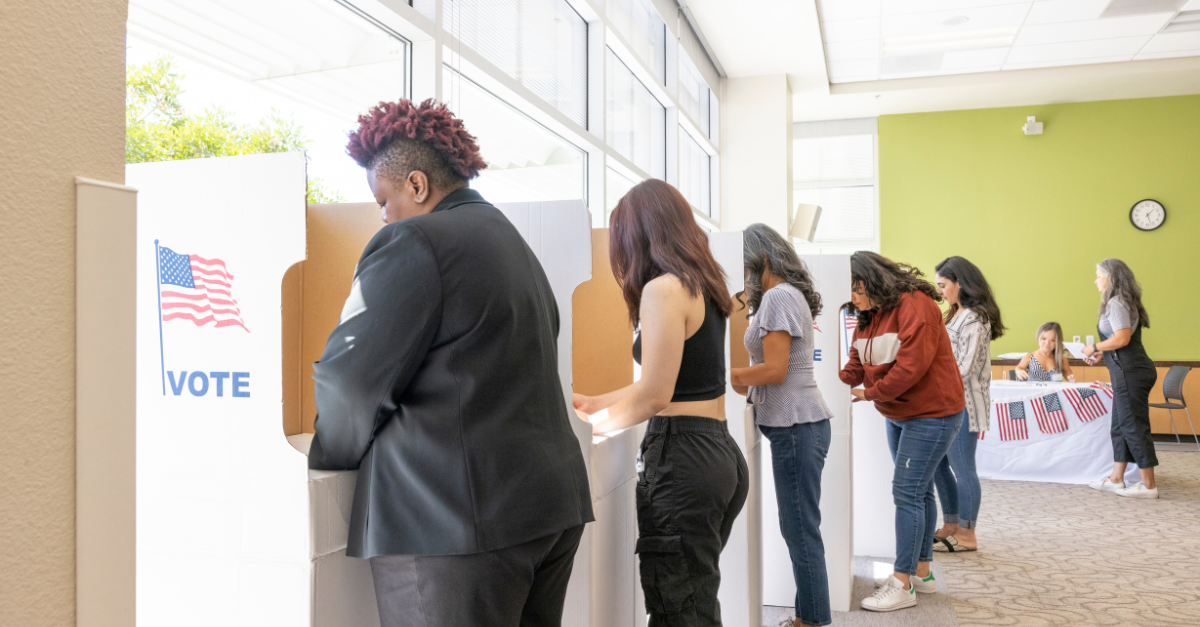
Yesterday, the United States Supreme Court issued its decision in Louisiana v. Callais , ruling 6–3 that Louisiana’s congressional map creating a second majority-Black district is an unconstitutional racial gerrymander. In reaching that decision, the Court narrowed how Section 2 of the Voting Rights Act may be used to remedy racial vote dilution, despite prior findings that Louisiana’s earlier maps likely infringed on the voting rights of Black residents. This decision marks a serious setback for voting rights and democratic participation. For nearly six decades, the Voting Rights Act has served as a cornerstone of our legal system’s effort to confront and remedy structural discrimination in the electoral process. By restricting the tools available to address unequal representation, the Court’s ruling makes it harder to correct long standing disparities in who has a voice in our elections. In a dissent read aloud from the bench, Justice Elena Kagan cautioned that the Court’s decision undermines one of the last effective tools for protecting fair representation. Describing the ruling’s impact on the Voting Rights Act, she wrote that Section 2 is now “all but a dead letter,” unable to fulfill its core purpose. She highlighted that a democracy cannot function as promised when the law prevents meaningful remedies for electoral systems that lock some communities out of political power. NAWL is committed to a democracy that works for everyone, supported by a legal system that recognizes discrimination and acts to correct it. As lawyers, judges, advocates, and scholars, we understand that voting rights are foundational to all other rights. NAWL will continue to engage its members on the implications of this decision through education and dialogue. We invite NAWL members to continue this important conversation by attending our session “ Louisiana v. Callais : Voting Rights and the Future of Our Democracy” at NAWL’s 2026 Annual Meeting in Chicago on July 22–23 . Hear from Jessica Ellsworth (Partner and Co-Chair, Supreme Court and Appellate Practice at Hogan Lovells), Samuel Spital (Associate Director-Counsel at the Legal Defense Fund), Franita Tolson (Dean of USC Gould School of Law), and Wendy Weiser (Vice President, Democracy at Brennan Center for Justice). Our expert panel will examine the implications of this decision and its future impact on voting rights and the rule of law.

Perkins Coie LLP v. U.S. Department of Justice
Doe v. Catholic Relief Services

Female Athletes United v. Ellison

Perkins v. State of Montana

Metropolitan School District of Martinsville v. A.C.

Last week, the United States Supreme Court issued its decision in Medina v. Planned Parenthood South Atlantic , ruling 6–3 that individual Medicaid beneficiaries cannot sue state officials to enforce the “free-choice-of-provider” provision of the Medicaid Act. The Court’s decision could pave the way for states to exclude providers like Planned Parenthood from Medicaid programs, even when doing so limits access to essential reproductive and preventive health care -- and even when the sole basis for doing so is for ideological reasons. This ruling marks a significant setback for reproductive justice and health equity. By narrowing the ability of individuals to challenge state actions that restrict access to care, the Court has further eroded the legal tools available to protect the rights of patients who rely on Medicaid to access fundamental healthcare, including preventative and general care and access to contraception. Marginalized communities will likely be disparately affected. Justice Ketanji Brown Jackson, in a powerful dissent, emphasized the real-world consequences of the majority’s decision: “[T]oday’s decision is likely to result in tangible harm to real people. At a minimum, it will deprive Medicaid recipients in South Carolina of their only meaningful way of enforcing a right that Congress has expressly granted to them. And, more concretely, it will strip those South Carolinians—and countless other Medicaid recipients around the country—of a deeply personal freedom: the ‘ability to decide who treats us at our most vulnerable.’” NAWL is proud to have joined with the Women’s Bar Association of the District of Columbia in filing an amicus brief which underscored the importance of preserving legal avenues for patients to challenge discriminatory and harmful state policies. NAWL stands in solidarity with Planned Parenthood, reproductive rights advocates, and the millions of individuals whose access to care is now at greater risk. We urge our members and allies to continue advocating for a legal system that upholds the rights, health, and dignity of all people—regardless of income, identity, or geography. --- NAWL will continue the conversation at the 2025 Annual Meeting . Hear about this Supreme Court term’s major decisions affecting NAWL’s mission from Arabella Babb Mansfield Award Recipients and co-hosts of the Strict Scrutiny podcast: Leah Litman, Professor of Law at University of Michigan Law School; Melissa Murray, Professor of Law at New York University School of Law; and Kate Shaw, Professor of Law at University of Pennsylvania Carey Law School. Additionally, after a workshop screening of the film Zurawski v Texas , Cici Coquillette from the Center for Reproductive Rights and Cassie Ehrenberg from The Lawyering Project and Abortion Defense Network will specifically discuss the Medina decision.
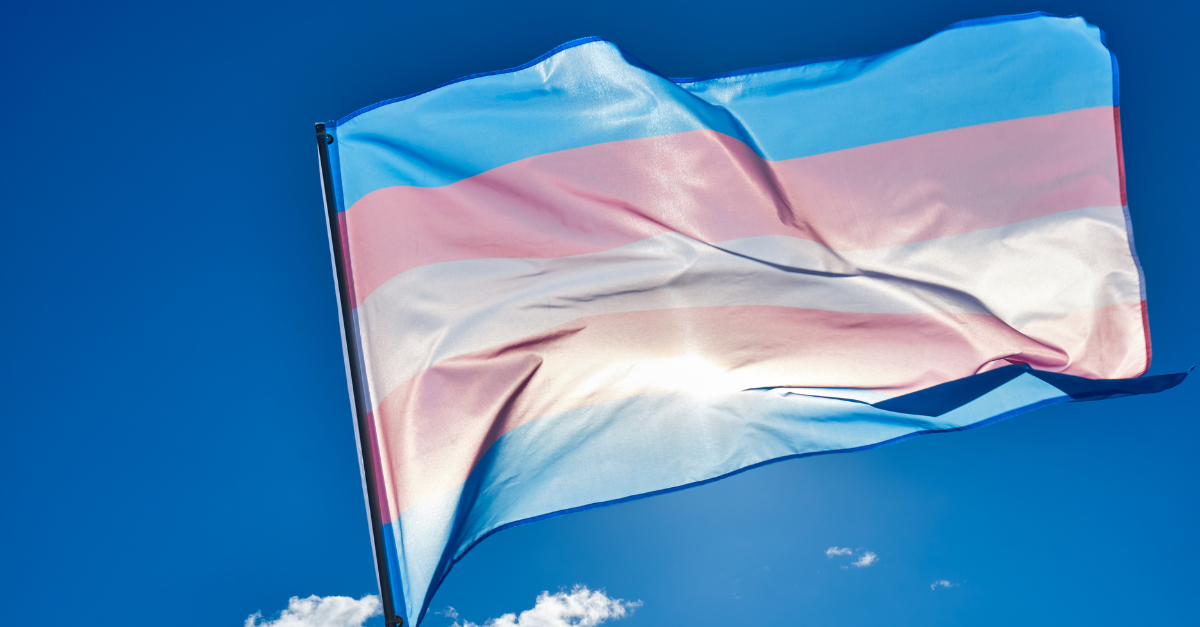
Last week, the United States Supreme Court issued its decision in United States v. Skrmetti , which upholds a Tennessee law (SB1) banning gender-affirming medical care —such as puberty blockers and hormones— for transgender minors. In the 6–3 decision, the Court held that SB1 does not warrant heightened scrutiny under the Equal Protection Clause, despite its discriminatory targeting of transgender youth by explicitly permitting hormone treatments and gender-affirming care for youth who identify as cisgender, while denying the same care for youth who identify as trans. This ruling has the potential to reshape access to health care and marks a profound erosion of the Equal Protection clause as a tool for challenging laws that disproportionately affect women and other marginalized groups. Justice Sonia Sotomayor, in a searing dissent, laid bare the consequences of the Court’s refusal to confront the reality of this legislation: “[T]he majority refuses to call a spade a spade. Instead, it obfuscates a sex classification that is plain on the face of this statute, all to avoid the mere possibility that a different court could strike down SB1, or categorical healthcare bans like it. The Court's willingness to do so here does irrevocable damage to the Equal Protection Clause and invites legislatures to engage in discrimination by hiding blatant sex classifications in plain sight. It also authorizes, without second thought, untold harm to transgender children and the parents and families who love them. Because there is no constitutional justification for that result, I dissent.” As an organization committed to advancing gender equity under the law, NAWL stands with transgender individuals, families, advocates, and scholars who continue this long fight. The Court’s application of rational basis review to state laws targeting a specific “medical use” may also have far-reaching negative consequences on gender health equity more broadly, including access to reproductive care. NAWL calls on its members and allies to speak out, support impacted communities, and work toward a legal system rooted in dignity, equity, and justice for all. --- NAWL will continue the conversation at the 2025 Annual Meeting during the session, “ U.S. v. Skrmetti : The Future of Gender Equity in Healthcare,” featuring National Center for LGBTQ Rights Legal Director Shannon Minter and Executive Director of the Williams Institute Christy Mallory .